You Don’t Need to Believe in Human Design for It to Be Real
Every so often, I see the same question pop up in the Human Design space:
“Is Human Design actually real?”
And honestly, I understand why the question keeps surfacing. Because underneath there’s often something much deeper, whether that’s skepticism, uncertainty, disappointment or confusion. As human beings, we long to know why we are the way we are and how to have a purposeful life.
And Human Design can initially feel like that answer. I often witness how first encounters with the system make certain things click into place. There’s a deep sense of recognition that happens. But I’ve also seen the other side of it.
In this piece, I want to explore what really sits beneath that question, why so many people feel disconnected from their design, and how my own relationship with Human Design shifted once I stopped treating it as something to believe in and started using it as a tool for deeper self-honesty.
Here’s What We’ll Explore:
Human Design Can Distract Us from the Real Inquiry
Over the years, my relationship with Human Design has changed significantly because of this. At first, like many people, I approached it as something to understand and figure out. This system was finally going to help me sort out my life and get me back on track. But my lived experience kept disrupting that. I kept noticing the frustration that was still running my life, a life that wasn’t moving in the direction I wanted it to.
Some of my experiments have been extreme and, honestly, that is part of my design. I’ve followed impulses, tested my own edges, overrode my responses, hit plenty of walls, and even questioned everything. But through it all I discovered that no amount of intellectual understanding can replace direct lived experience.
And eventually, I realised that the question about the realness of Human Design often distracts us from the deeper inquiry: can Human Design help us live a more honest life — one that actually feels like ours?
That’s when Human Design stopped being something I needed to believe in, and became a lens through which to observe my life. That, to me, is the real spirit of the experiment.
When Our Design Doesn't Reflect Our Current Reality
Even Ra himself, who transmitted this knowledge, repeatedly said not to believe what he shared blindly, but to test it through your own experience. He encouraged everyone to experiment and to observe what actually happens in your life when you do start to choose differently. And I feel like this is where so much of the tension around Human Design comes from.
Many people are not really looking for experimentation. They are looking for certainty. They want reassurances that this thing works, that they are on the right path, that they are making the right decision, and that their struggles have meaning. But that’s not really what Human Design is for.
Human Design is here to help us deepen our awareness of our way of operating in this world. It’s a tool that can help us notice where we override our own truth, where we contort to fit certain expectations and norms, where our choices are driven by fear, where our bodies say one thing while our mind says another. And that level of self-honesty is not always comfortable. It’s not easy to admit how we’ve disempowered ourselves or given our responsibility for our choices away.
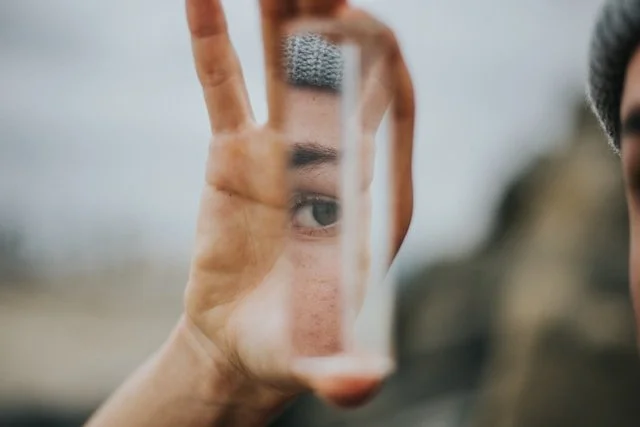
Human Design offers us a mirror and sometimes what we see in it does not match our current reality. Maybe because we have spent years chasing the thing we’re supposed to want. Or because our nervous system has adapted to constant survival instead of authentic self-expression. Perhaps parts of us have become so distorted, suppressed, or disconnected that what we see in the bodygraph doesn’t resemble the person we see ourselves to be.
And yet, in many spaces, Human Design is still interpreted in an extremely rigid way. Descriptions are taken literally. We try to fit ourselves into what our design tells us, rather than observing how it plays out in our everyday life. We follow advice word for word without staying connected to our own lived experience.
That, to me, is another form of self-abandonment. Because the trap that’s easy to fall into here is how to do one’s design correctly rather than what’s actually true right now. To me, this is part of what feels is missing from a lot of the Human Design space: the deeper contact with reality, our bodies, our felt sense experience and our nervous system. Because if your baseline is not safety in your own body, then no amount of mental experimentation is going to shift your reality.
The Bodygraph Is the Starting Point
Knowing your chart intellectually is not the same thing as knowing yourself intimately. You need to know what your baseline is. You need to be able to discern between when your energy flows naturally versus when you’re forcing something. You need to be able to observe what’s happening in your body before you override its truth. You need to be able to know what feeling safe feels like in your body. And it’s through this deep self-intimacy that your design blossoms.
These are very different enquiries from what your Type or Strategy says about you. That’s not to say that these elements can’t be part of the process. They absolutely are because your Type most certainly helps shape your deconditioning process. But I no longer see it as the ultimate truth or a fixed identity to live up to. I see it as a tool for deeper self-inquiry and self-knowing.
The bodygraph is the starting point for experimentation. It’s a way of noticing where you’re going against your own energy. It lets you know where you’re trying to contort yourself around others’ expectations, desires, timelines, or definitions of success. It helps you see where you’re outsourcing authority instead of developing intimacy with your own body and experience.
And yes, the world we live in absolutely makes this harder. And while the systems we live inside absolutely shape us, we still participate in our own lives. We still make choices, consciously or unconsciously, about whether we move closer to ourselves or further away.
The Humbling Journey to a More Honest Life
And this is also where I have had to become radically honest with myself. As a 3/5 profile, I know how easy it is to fall into victim narratives and pull others in with me. I have done it. I know what it feels like to believe life is happening to me rather than recognising where I’m still abandoning myself within it or blaming someone or something else for my frustration.
That journey has been deeply humbling. Because ultimately, Human Design hasn’t saved me from uncertainty. But it has brought me into closer relationship with myself inside it. And maybe that is where its real value lives. It helps us become more honest with ourselves and others.
So if there’s only one thing you’re going to take from it, let it be this: how can Human Design help me live a more honest life?
And if you feel like digging deeper, here are a few journal prompts:
Where am I going against myself right now?
Where am I contorting myself around others’ expectations?
What feels true in my body before my mind gets involved?
Where have I mistaken survival patterns for who I am?
What would honesty look like in this season of my life?
What kind of life actually feels like mine?
These are some of the questions I explore with clients in the work that we do together. My aim is never to tell you who you are; rather, it’s an invitation back into deeper contact with yourself through the body, your lived experience, self-reflection, experimentation, and self-observation.
That’s where Human Design becomes real, as something to live with honestly.
Hi, I’m Silvia Poldaru. I work with Human Design through the body, supporting deep feelers and overthinkers to trust themselves in real life. Curious to learn more about who I am and why I do this work? Read more here.
The image credit goes to Vince Fleming from Unsplash.