Why Feeling Stuck Isn't Always a Sign Something Is Wrong

There comes a point in many of our lives when nothing seems to move.
You make another plan, read another self-help book, even journal through the uncertainty. You tell yourself that if you could just figure it out, you'd finally know what to do next.
And yet, despite all the thinking, something still feels stuck.
Maybe you've found yourself questioning your career, your relationships, or the life you've spent years building. Maybe you're longing for change but every direction feels heavy. Or perhaps you're exhausted from trying to force clarity that never quite arrives.
For a long time, I assumed this meant something was wrong with me. That I wasn't courageous enough, disciplined enough, or somehow missing the one insight that would finally move my life forward.
But what if feeling stuck isn't always a sign that you're lost?
What if it's your body recognising that you're trying to move in a way that no longer fits?
That question changed everything for me.
Over the past few years, I've come to see stuckness very differently. Through understanding my nervous system and exploring my own Human Design experiment, I realised that what I had been calling resistance was often my body asking me to stop abandoning myself. The friction wasn't something to overcome. It was pointing me back towards myself.
What we’ll explore:
Why Feeling Stuck Can Feel Frightening
The Stories the Mind Creates When We’re Feeling Stuck
How Your Body May Already Be Communicating Something Different
How Knowing Our Human Design Type Can Help Us Move Through Stuckness
A Simple Practice for Meeting Resistance
Why Feeling Stuck Feels So Frightening
One of the biggest misconceptions about feeling stuck is that we assume it means we've stopped growing.
In a world that celebrates constant progress, productivity, and certainty, standing still can feel like failure. We tell ourselves that if we aren't moving forward, we're falling behind. So when life slows down or clarity disappears, our first instinct is often to find a way out as quickly as possible.
I know that impulse well.
For years, my default response was to think harder and analyse every option. I wanted to find the next strategy. Surely if I could just make the right plan, I could get things moving again. But over time, the harder I tried to force an answer, the more disconnected I felt from myself.
I've since come to believe that what makes stuckness so uncomfortable isn't simply the lack of movement. It's what that pause reveals. We’re finally having to face the uncertainty that we've been trying to outrun and be with the pressure we've been carrying.
It reveals the conditioned ways we've learned to keep ourselves safe by always doing, fixing, planning, or proving. Which is where I think the nervous system becomes an important part of the conversation.
When our nervous system doesn't experience uncertainty as safe, stillness can feel surprisingly threatening. The mind quickly steps in to restore a sense of control. It starts searching for answers, creating plans, or convincing us that we simply haven't found the missing piece yet.
From the outside, it looks like we're trying to move forward. From the inside, we're often trying to escape the discomfort of not knowing.
Looking back, I can see now that I was always searching for certainty. And it’s not the same thing as having clarity. Because certainty asks life to make promises it never can. Clarity, on the other hand, often emerges once we stop fighting the moment we're in.
Perhaps that's why so many of us feel exhausted during life's transitions. We spend enormous amounts of energy trying to escape the very space that may be asking us to slow down long enough to hear ourselves again.
When Our Body Asks Us to Stop
Late last year, I found myself in that in-between space.
I'd been sending regular newsletters, writing journal entries, and showing up consistently on social media. From the outside, everything looked as though it was moving in the right direction. But underneath it all, my body was quietly asking me to stop.
My mind wasn't ready to listen.
What if I fall behind?
What if people forget about me?
What if this dream I've been working towards never happens?
The louder those questions became, the more restless my body felt. It was as though every part of me was bracing for something. I kept telling myself that if I could just find the right strategy, the right idea, or become a little braver, I'd finally create the momentum I was searching for. But there was no aliveness behind any of it.
Eventually, I stopped arguing with what my body had been trying to tell me all along. I stepped away.
At first, I didn't really know what to do with myself. My mind kept searching for the next thing to fix or improve, making up story after story about why stopping was a mistake. Watching those stories unfold became part of the practice. I wasn't trying to silence them anymore. I was simply beginning to notice them.
And then something unexpected happened. It felt as though my whole body let out one long exhale.
The tension I'd been carrying for months slowly began to soften. I wasn't forcing myself to create anymore. I had space to breathe and listen. I had given myself space to let my Sacral respond instead of constantly asking my mind to decide what came next.
For a while, that looked like doing very little. And that was uncomfortable. Because I'd spent so many years believing that progress always looked like movement. That if I wasn't producing something, I must be falling behind.
But as the weeks passed, something much quieter returned. My creativity. I could finally hear myself again. I felt more grounded in my own life than I had in a long time. And that's when I realised something that still stays with me today.
The life I'd been chasing wasn't somewhere in the future. It was already here. I'd simply been so busy pursuing an ideal version of my life that I'd stopped noticing the one my body had been inviting me to live all along.
That experience changed the way I understand stuckness. It no longer felt like something to overcome. Rather, it became an invitation to stop pushing myself against the current.
What Stuckness Is Actually Trying to Tell You
One of the biggest shifts in my own Human Design experiment came when I stopped seeing stuckness as something to overcome. Instead, I began asking a different question. I got curious about what the feeling was trying to tell me.
Because for a long time, I'd assumed resistance meant I needed to push harder. That I simply hadn't found the right thing yet. Now I'm not so sure.
Looking back, I can see that the moments I felt most stuck weren't the moments I wasn't moving. They were the moments I was trying to move against myself. I was forcing decisions instead of waiting for something in my body to respond. I was trying to manufacture momentum instead of allowing my energy to unfold naturally. I was staying visible because I thought I should, even when there was no real aliveness behind what I was creating.
My body knew long before my mind did. Looking back, it always had. I simply hadn't learned how to listen.
I felt it as a heaviness that seemed to settle through my whole system. Sometimes it felt like walking through molasses. Other times it showed up as tension in my body, a buzzing restlessness, or an urgency that convinced me I needed to make something happen immediately.
The strange thing was that my mind interpreted all of those signals as evidence that I needed to try harder.
But what if they weren't obstacles?
What if they were corrections?
I've come to see that our bodies often recognise misalignment before our minds have the language to explain it. They quietly let us know when we're acting from pressure rather than genuine response, from fear rather than trust, from conditioning rather than our own inner knowing.
That doesn't mean every uncomfortable feeling is telling us to stop. Growth will always ask something of us. But there is a difference between the discomfort that comes from stretching beyond what's familiar and the friction that comes from repeatedly abandoning yourself.
One expands you whilst the other slowly asks you to become someone you aren't.
Perhaps that's why stillness can be so transformative. And it’s not because stillness magically solves our problems, but because it interrupts the pattern.
When we stop rushing to fix, force, or figure everything out, we create enough space to notice what's actually happening inside us. Sometimes that's where the next step quietly reveals itself. And sometimes the deepest shift isn't moving forward at all.
It's finally stopping long enough to realise you've been walking in a direction that was never yours to begin with.
The Stories the Mind Creates When We Feel Stuck
Of course, the mind rarely tells us that's what's happening. Instead, it creates stories. Maybe you've heard some of them yourself.
"I just need a better plan."
"Everyone else seems to know what they're doing."
"If I stop now, I'll lose everything I've worked for."
"I'm wasting time."
"I should be further ahead by now."
"What's wrong with me?"
The mind is remarkably good at making these stories sound like facts. And when we're already feeling uncertain, they become incredibly convincing.
In Human Design, these conditioned patterns are often described as the Not Self. They're the mental habits we've developed in response to our conditioning, the ways we've learned to seek safety, certainty, approval, or control.
The goal isn't necessarily to get rid of those parts of ourselves. But we do want to become familiar with them. Once we can recognise these stories as conditioned patterns rather than absolute truth, we don't have to believe every thought simply because it appears. Instead, we can become curious.
What is this story trying to protect me from?
What feels unsafe about slowing down?
What happens if I don't immediately act on this urgency?
To me, this is where embodied deconditioning begins. We’re not trying to silence the mind or think more positively. Rather, the idea is to observe when the mind has taken the steering wheel and gently return to the wisdom of the body. The body can simply show us, moment by moment, what feels true.
How Each Human Design Type Tends to Create Stuckness
Although feeling stuck is a universal human experience, Human Design offers an interesting perspective on why we tend to create that friction in the first place.
I want to be clear here: Human Design doesn't remove our conditioned patterns. It simply gives us a language to recognise them. The real shift happens in the moment we notice the urge to override ourselves and choose, however imperfectly, to relate to our bodies differently.
That's why I see Human Design less as a system that gives us answers and more as a compassionate mirror. It helps us recognise where we've been pushing against our own rhythm, so we can begin experimenting with another way.
Each Type has a different way of interacting with life. Rather than being a set of rules to follow, your Strategy points towards the way your body naturally moves through the world. And when we repeatedly override that way of moving, our bodies often let us know.
This is why I've come to see waiting differently. Waiting isn't what creates the discomfort. It simply reveals where we've been conditioned to move against ourselves. It shines a light on the places where urgency has replaced trust, where pressure has become normal, and where the mind has learned to take over.
Here's what that can sometimes look like according to your Human Design Type.
Generators
Generators often feel stuck when we try to make life happen instead of responding to what's already asking for our energy. The mind tells us we need to find the opportunity, create momentum, or stay one step ahead. So we initiate from pressure rather than genuine aliveness.
At first it can feel productive. But eventually everything starts to feel heavy.
You might notice yourself constantly starting new projects only to lose interest a few weeks later. Or perhaps you're saying yes because it feels like the sensible thing to do, even though your body quietly contracts.
The result isn't usually a lack of motivation. It's effort without life force behind it.
Projectors
Projectors often become stuck when they're trying to prove they're worthy of being seen.
Instead of allowing recognition to emerge naturally, you work harder, give more, and overextend yourself in the hope that someone will finally notice your value. Ironically, the more you try to earn recognition, the less recognised you often feel.
Eventually, your body begins to ask you for rest because you’ve been carrying responsibilities that were never yours to hold.
Manifestors
Manifestors can find themselves stuck when they begin anticipating other people's reactions before they've even acted.
Instead of trusting your initial impulse, you hold yourself back, second-guess your ideas, or try to control how others might respond. That hesitation creates tension. You’re constantly editing yourself before you've even begun.
Sometimes your body is simply asking: what would happen if you trusted your own impulse before worrying about everyone else's?
Reflectors
Reflectors often experience stuckness when they're pressured to find immediate certainty.
Whether the pressure comes from other people or from yourself, rushing clarity rarely allows enough space to discover what genuinely feels right. Over time, you can lose touch with your own experience by trying to become what each environment asks you to be.
Sometimes the greatest gift you can give yourself is time. Remember, that doesn’t make you indecisive. It simply means your body is still listening.
Whatever your Type, the invitation is remarkably similar. Rather than asking yourself what’s the best way to get unstuck, I’d encourage you to get curious about where you tend to move against yourself. Because that's often where the body begins pointing us home.
Stillness Isn't the Same as Being Stuck
One of the biggest insights I've had over the past few years is that stillness and stuckness aren't the same thing. But for a long time, I treated them as though they were.
If nothing was happening, I assumed I was falling behind. If I wasn't making progress, I assumed I'd somehow failed. So I filled every quiet moment with more doing.
Looking back, I can see that I wasn't afraid of being stuck. I was afraid of meeting myself in the stillness. Because stillness has a way of revealing everything we've been too busy to notice.
It shows us the exhaustion we've normalised. The grief we've been outrunning. The dreams we've quietly dismissed because they didn't seem practical. The parts of ourselves we've abandoned in order to become who we thought we needed to be.
Stillness can be uncomfortable. In fact, when our nervous system has learned that productivity equals safety, slowing down can feel deeply unsettling. But perhaps that's exactly why it's so important. It interrupts the habit of constantly ignoring our body’s signals. And sometimes that's where the change we want begins to happen. We can hear ourselves again.
I often think back to that period after I stepped away from constantly creating. At first, all I could hear was the noise in my mind. Then, slowly, there was space. Space to breathe, to notice, and to feel my own Sacral response again.
And with that space came something I'd been searching for everywhere else. I felt a quiet sense that I was finally living my own life instead of chasing an ideal version of it.
Perhaps that's what our bodies have been trying to tell us all along. That the life we're longing for often becomes visible the moment we stop forcing the one that isn't ours.
A Simple Practice for Meeting Resistance
The next time you notice yourself feeling stuck, resist the urge to immediately solve it. Instead, pause. Take a slow breath. See if you can become curious before giving into the need to be productive.
Ask yourself: what is my body trying to tell me right now? Notice what happens next.
Where do you feel the tension?
Is it a heaviness in your chest? A tightening in your stomach? A restless buzzing that keeps convincing you to do something?
And then gently turn your attention towards your mind.
What stories are appearing?
What feels so urgent?
What feels unsafe about slowing down?
You don't need to silence those thoughts or convince yourself they're wrong. Simply notice them. Because awareness is often the beginning of change.
If you'd like to explore this more deeply, here are a few questions you might like to journal with afterwards:
What happened this week that made me feel stuck?
What story did my mind immediately create about that experience?
Where did I notice it in my body?
Was I responding to what was actually happening, or reacting to what my mind feared might happen?
If I trusted my body's timing just a little more, what might change?
Remember, there are no perfect answers. Sometimes simply noticing the pattern is enough. Because once you recognise the moment you've started moving against yourself, you also create the possibility of choosing differently.
Your Body Isn't Standing in the Way
If there's one thing I hope you take away from this, it's that your body isn't trying to stop you from living your life. It's trying to stop you from abandoning yourself.
For so many of us, feeling stuck isn't a sign that we've lost our way. It's what happens when we've spent so long following urgency, pressure, and other people's expectations that we've stopped hearing our own inner guidance.
That's why I no longer see stuckness as the enemy. Sometimes it's the body's quiet invitation to pause long enough to remember what was always true. Not everything that feels uncomfortable needs to be pushed through. Sometimes the discomfort is showing you where you've been overriding yourself.
Sometimes the friction is the correction. And sometimes the most courageous thing you can do is to trust that your body may already know the way forward, even if your mind hasn't caught up yet.
Where to Go Next
Recognising that you're feeling stuck is often the first step. But noticing the pattern is only the beginning.
The deeper work is learning how to meet those moments differently and to recognise when your mind is trying to pull you back into old patterns and create enough safety in your body to choose another way.
This is the foundation of Embodied Deconditioning.
If this essay resonated, you might also enjoy exploring Why Real Change in Human Design Happens Through the Nervous Systemor Why Learning Human Design Doesn’t Automatically Build Self-Trust.
Understanding your design is only the beginning. The deeper transformation happens when your body feels safe enough to live it.
And if you’re new to Human Design, I’d encourage you to start here.
Or, if you're ready to explore the specific patterns that keep pulling you away from yourself, The Friction Within is a reflective space designed to help you notice what's underneath your stuckness and begin building a different relationship with those patterns.
Sometimes the next step begins by creating enough space to hear yourself again.
Hi, I'm Silvia. I work with Human Design through the body, supporting highly sensitive women navigating burnout and life transitions to build self-trust through embodied awareness rather than more information. If you're curious about my story and the philosophy behind this work, I'd love to welcome you here.
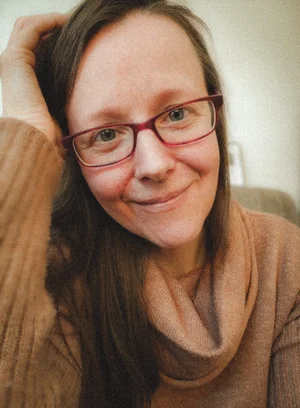
The image credit goes to Cody Black from Unsplash.