How to Live Your Human Design Without Information Overload

There comes a point in most of our Human Design journeys where learning quietly stops feeling helpful. You save another Instagram post, watch another chart breakdown, and ask AI another question. And somehow, despite knowing more than ever about your design, you trust yourself less than when you first began.
If you are someone who naturally takes in a lot, whether that’s other people's emotions, subtle shifts in the environment, information, or expectations, it makes sense that Human Design can become another thing your system tries to organise. Understanding can feel like healing.
When I first discovered Human Design, I immersed myself in it. I learned about my Type, Strategy and Authority. I explored my Centres, Gates, Channels and Profile. Every new layer felt like another piece of the puzzle falling into place. It gave language to experiences I'd never been able to explain before and softened years of self-judgement.
But when life asked me to make a decision, set a boundary, or trust what my body already knew, I hesitated. I understood my chart but I didn't know how to live it. So I did what many of us do. I looked for more information.
Without realising it, what had begun as genuine curiosity slowly became another way of searching for certainty.
This journal entry explores what it really means to over-consume Human Design, why it happens (especially if you have a sensitive nervous system), and how to gently shift from collecting more information to actually living your experiment.
What We’ll Explore:
What It Really Means to Over-Consume Human Design
Why More Information Can Feel Safer Than Trusting Yourself
What Human Design Was Actually Designed For
Signs You Are Overthinking or Over-Consuming Human Design
How Over-Consuming Can Look Different by Your Human Design Type
A Simple Practice to Return to Your Body
What It Really Means to Over-Consume Human Design
Over-consuming Human Design isn't about studying your chart or being genuinely curious. It's when information quietly begins replacing experience.
Instead of observing your own life, you start searching for another explanation or interpretation. You want the definitive answer that will finally make everything click.
So you might find yourself:
reading your chart over and over again.
saving endless posts "for later."
watching chart breakdowns late into the evening.
comparing your design to everyone around you.
asking AI to interpret every decision before you trust your own experience.
None of these things are inherently wrong. Learning is part of the journey. The difficulty begins when learning becomes a substitute for living. Many of these patterns are incredibly common when we're new to Human Design.
When every new piece of information promises certainty, it's easy to believe the answer is just one more article away. But the irony is that the more we rely on information to feel safe, the further we drift from the very thing Human Design is trying to help us develop: our own Inner Authority.
Why More Information Can Feel Safer Than Trusting Yourself
Most people don't discover Human Design because life already feels deeply aligned. We come searching because something isn't working. We're looking for relief or recognition, direction or permission to stop living by someone else’s expectations.
Human Design often offers exactly that. It reflects back parts of ourselves we've sensed all along but never had language for. For many of us, that recognition feels like coming home.
But our old coping strategies don't disappear simply because we've found Human Design. They often follow us into the experiment.
If your nervous system is already carrying stress or overwhelm, uncertainty can feel deeply uncomfortable. The mind naturally looks for ways to reduce that discomfort, and information offers a temporary sense of relief. It feels productive. It feels like progress. It even feels responsible.
When your system doesn't feel safe with uncertainty, the mind often tries to create safety through understanding. It starts scanning, analysing, and collecting information because knowing feels safer than not knowing.
But your body doesn't build trust through more answers. It builds trust through experiences where you listen and discover that you can handle what comes next.
Looking back on my own journey, I wasn't actually searching for more Human Design information. I wanted the chart to give me answers. But that’s not something Human Design was ever designed to give us. Because the answers, more often, are already within us. It just might not be the right time.
Signs You Are Overthinking or Over-Consuming Human Design
Sometimes this shift happens so gradually that we barely notice it.
Here are a few gentle signs that learning may have become another way of avoiding your own lived experience.
Mentally
You constantly second-guess your understanding of your chart.
You keep searching for someone else's interpretation.
You worry you're "doing your design wrong."
Every answer creates three new questions.
Physically
Your mind feels foggy or overloaded.
You notice heaviness behind your eyes after consuming content.
Your whole body feels tired but your mind keeps searching anyway.
You feel more scattered than grounded.
Behaviourally
You check your chart before checking in with yourself.
You keep saving content instead of experimenting with what you already know.
You delay difficult conversations or decisions by staying in learning mode.
You convince yourself you need one more course before you can begin.
None of these mean you're failing. If anything, they simply suggest your nervous system may be looking for safety through information.
And that's an incredibly human thing to do.
What Human Design Was Actually Designed For
One of the biggest shifts in my own journey came when I realised something surprisingly simple. Human Design was never meant to become another authority. Rather, it was always meant to help me discover my own.
Your chart isn't asking you to memorise every Gate, Channel or Variable before you begin living differently. It's inviting you to observe yourself.
What happens when you honour your Strategy?
What happens when you get curious about how your Authority actually feels in your body?
What happens when you recognise the moments you override yourself and the moments you don't?
The experiment doesn't happen while you're analysing your chart. It happens in ordinary everyday moments.
You begin noticing:
how your body responds before your mind creates a story.
where you naturally have energy and where you force yourself.
when you override your own signals.
what decisions feel aligned after you make them.
These ordinary moments are where Human Design comes alive. And it’s not because your chart tells you what to do but because it teaches you how to recognise yourself.
If you're brand new to Human Design and you're wondering where to begin, you might enjoy this essay, where I share the few foundations that are actually worth focusing on before diving into the deeper layers of your chart.
How Over-Consuming Can Look Different by Your Human Design Type
One of the things I love about Human Design is that it gives us language for the patterns we may already recognise in ourselves. For instance, our Type can be a beautiful invitation to notice: where we might be looking outside ourselves for something our body is already showing us.
If You’re a Generator or Manifesting Generator
You might find yourself endlessly searching for the thing that will finally reveal your purpose, your passion, or the "right" path.
Because many of us have been conditioned to believe we have to make things happen. So waiting to respond can feel uncomfortable. You might find yourself searching for the perfect thing to respond to instead of noticing what already has energy in front of you.
The experiment for you is about noticing what creates a genuine response in your body and allowing that response to guide the next step.
If You’re a Projector
You might find yourself studying Human Design as a way to finally understand yourself enough so that you would be recognised by the people around you. You keep telling yourself that if only you understood your gifts deeply enough, you'd finally understand yourself well enough to be recognised. So you keep trying to discover yourself instead of allowing yourself to be seen in your uniqueness.
The experiment for you is about noticing where you are trying to force recognition rather than following your own curiosities and allowing yourself to be invited into what is correct for you.
If You’re a Manifestor
You might find yourself seeking permission before allowing yourself to move. When you have spent years adapting to other people's needs or expectations, acting on your own impulses can feel risky. So you either alienate yourself from others or suppress your need for independence.
The experiment for you is about noticing what happens when you trust your urge and communicate your next act clearly for those who are likely to be impacted by it.
If You’re a Reflector
You might find yourself looking outside yourself for answers. Because your deepest conditioning comes from your environment and the people you surround yourself with. So you keep wondering what’s wrong with you instead of noticing how your body responds over time and space and trusting that as useful data.
The experiment for you is about noticing what your environment reveals to you over time and not identifying with everything that moves through you.
Whatever your Type, the pattern is often the same: the mind reaches for more information when the body is asking for more trust. Your chart is not asking you to become an expert in yourself before you live your life. It’s inviting you to become curious about the relationship you already have with yourself.
A Simple Practice to Return to Your Body
The next time you notice yourself reaching for more Human Design information, pause for just sixty seconds. Place one hand somewhere on your body if that feels supportive. Take one slow breath in through your nose. Exhale gently through your mouth, allowing the exhale to become a little longer than the inhale.
Then ask yourself: what am I hoping this information will give me?
Notice whatever arises without trying to change it. Then ask yourself: what do I already know? What have I already experienced for myself?
The goal here is to rebuild the relationship between your body and your choices.
Finally, choose one tiny action. Close the laptop. Step outside. Feel your feet on the ground. Drink a glass of water. Or simply allow yourself to sit with that sense of not knowing for another minute.
That's where the real experiment begins.
Permission to Step Away from the Noise
If you've recognised yourself anywhere in this article, let that be a relief rather than another thing to fix. Your nervous system can only integrate so much at once.
Sometimes the most supportive thing you can do for your Human Design experiment is giving yourself enough space to notice what you've already learned. Because the goal was never to become someone who understands Human Design perfectly. The goal was always to become someone who trusts themselves a little more each day.
But I also want to leave you with this: learning Human Design isn't the problem. The question is whether what you’re learning is helping you reconnect with yourself, or is it pulling you further away and into your mind?
Over time, the chart becomes less about information and more about recognition. It’ll be less about seeking certainty and more about your relationship with it.
And that's where self-trust quietly begins to grow.
P.S. If you're reading this and recognising that you've been collecting Human Design information but struggling to actually live it, this is exactly why I created Your Living Body Map. Rather than giving you more information to memorise, it's a nervous-system-aware interpretation of your chart designed to help you build a relationship with your own lived experience, so your design becomes something you can genuinely embody.
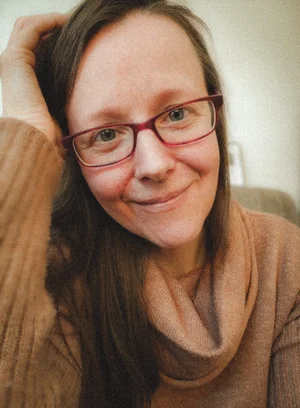
Hi, I’m Silvia Poldaru, a body-led Human Design guide. I help Highly Sensitive women reconnect with themselves through Human Design and nervous system work whilst navigating burnout and midlife transitions.
Curious to learn about who I am and why I do this work? Read more here.
The image credit goes to Issara Willenskomer from Unsplash.